Beyond Shrines: Living Heritage of the Awadh
Origins of Ayodhya in Aryavarta and Oral Tradition
The first stream of ancient Indian history, which spins its way from the earliest settlements and then makes it the Aryavarta- the land of Ancient Aryans, Vedas and Upanishads- was conceived, perfected and handed down by memory -shruti from generation to generation till Rishi Vyas gave it a written form. In this land of Aryavarta, Lord Ram Chandra, an incarnation of Lord Vishnu, was born into the Ikshvaku dynasty in Ayodhya, Awadh. This legend has remained an integral part of Awadh's history, as noted by the great sages Valmiki and Tulsidas.
In Ramayan, with the description given we can visualise the cities with the magnificent temples all over the place. Rishi Valmiki says
प्रासादै रत्न विकृतैः पर्वतैः इव शोभिताम् ।
कूटागारैः च संपूर्णाम् इन्द्रस्य इव अमरावती (१-५-१५)
चित्रम् अष्टापद आकाराम वर नारी गणैर्युताम्।
सर्व रत्न समाकीर्णाम् विमान गृह शोभिताम् ॥ (१-५-१६)
“It looked splendid with its well laid out and broad highway strewn with flowers and regularly sprinkled with water. The enhancer of the empire, King Dasharatha made Ayodhya his abode, as Indra made heavens his abode…. The city with suburban towns on all sides had several female dancers and actors.It was filled with gardens and mango groves. It abounded with several elephants and horses, cattle, camels and mules. Like Indra's Amaravati, it was adorned by mountainous (huge) mansions (palaces) with precious stones.”
The Skanda Purana is the longest of the eighteen Mahapuranas, with more than 80,000 shlokas. Ayodhya Mahatmya appears in the Vaishnav Khand of the Skanda Purana. In 990 shlokas spread across 10 chapters, it covers the stories of many kings who ruled, as well as those of many sages and devatas. All the stories put together create the cultural and spiritual history and heritage of Awadh.
Reframing Temple Heritage: From Monument to Living Practice
Now coming to the shrines of Awadh, Temple architecture is often discussed in the past tense. We focus on when a temple "was constructed," which dynasty "patronised" it, or which period it belongs to. But across Awadh, this past-tense framing does this region a real disservice. In the contemporary administration, the Awadh region of Uttar Pradesh comprises Lucknow, Ayodhya, Devipatan, Prayagraj, and Kanpur as a cultural entity. Unlike many historic temple sites that are primarily understood through archaeology or viewed as monuments of the past, the temples of this region are mostly prehistoric and are still prayed to and maintained by a community that has never stopped treating them as part of daily life. If anything defines Awadh's temples, it is this refusal to become the past. Some are grand, and others have a humble appearance, but the common fact remains that all had a great past, and most are associated with the mythological stories and legends found in Hindu scriptures and epics like The Ramayan and The Mahabharat.
Beyond Ayodhya: The Wider Sacred Geography of Awadh
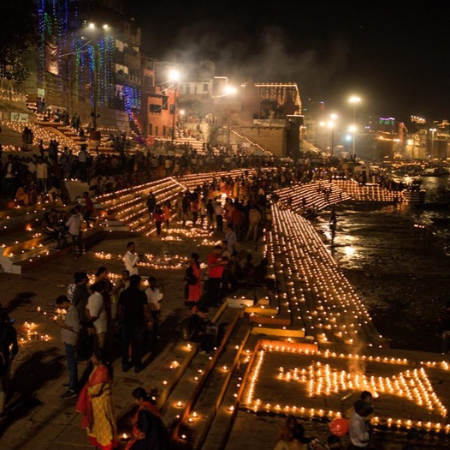
Ayodhya understandably dominates any conversation about sacred Awadh. But treating Ayodhya as the whole story misses something important: that the region is layered, district by district, with hundreds of other sites carrying the same devotional weight and almost none of the recognition. What keeps them standing is not policy or protection; it is a belief system. A lamp lit each evening, a courtyard swept each morning, a story repeated to a child the way it was once repeated to their grandparent, becoming an oral tradition. This is what it means when we say heritage here is living rather than preserved. What we encounter in Awadh is self-sustaining — heritage that continues because a community still chooses to keep evolving it out of reverence for it, not because an institution has decided it should.
The Territorial and Cultural Boundaries of Kaushal Rajya
Thus, this region of Awadh of ancient Kaushal Rajya comprises the Lucknow, Ayodhya, Kanpur, Prayagraj, and Devipatan districts of Uttar Pradesh and includes Kannauj, Bithoor, Gorakhpur, Shrawasti, and many other small towns that are significant and remarkable centres of rich cultural and religious heritage. There are some very picturesque temples and some very humble ones found all over Awadh, due to the vagaries of time and numerous invasions that took place in this region from 1100 A D.
Epic Associations: The Ramayana, Mahabharata, and the Sages of Awadh
Many of them have a legendary association with the great epics Ramayana and Mahabharata and the great characters like Lord Rama, Goddess Sita, and Lord Krishna, etc., and, in addition, with Rishi Vashishthha, Augustya, and Valmiki, who visited these sites, resided there, and whose many stories and anecdotes are associated with them. We are all aware that Tulsidasji was born in Gonda and wrote Ramcharitmanas in this region only, and that Valmiki also wrote Ramayan near Kanpur, in Bithoor, where his ashram still exists, and that Sita stayed there with Luv and Kush. All the Vedas and Puranas like Skand Purana, Matsya Purana were narrated and written in this sacred land of Awadh. The characters of Mahabharat are closely associated with this pious land, as Draupadi’s Draupad desh is near the Farrukhabad region, and a large part of the Pandavas' exile was spent only in the Awadh region. Many Shaktipeeths associated with Shaktaism are scattered throughout Awadh, such as Lalitadevi in Naimisharanya. In Lucknow alone, the Chandrika Devi temple is associated with Lord Lakshman and is revered as a great Shaktipeeth of which very few people are aware.
Coexisting Traditions: Bhardwaj Ashram and Devipatan
This distinction matters more than it might seem. A living cultural heritage is defined by its engagement with the present, being walked through, prayed at, and preserved without much ado. In Prayagraj, the Bhardwaj Ashram is associated with the ancient Hindu sage Bharadwaj and is believed to have sheltered Shri Ram, Sita, and Lakshman during their exile as described in the Ramayana. For many pilgrims, a visit to the Ashram naturally forms part of their journey to the Sangam of Kumbh fame- the sacred confluence of the Ganga, Yamuna, and the mystical Saraswati rivers. In Devipatan, a Buddhist stupa associated with Angulimal (a disciple of the Buddha) stands alongside Vaishnav and Shakta temples. Rather than replacing one another, these traditions continue to exist within the same landscape. This is what makes Awadh distinctive. Its sacred landscapes are not shaped by a single history, but by many layers of faith, memory, and time that continue to coexist.
Significance Beyond Scale: Local Shrines and Community Festivals
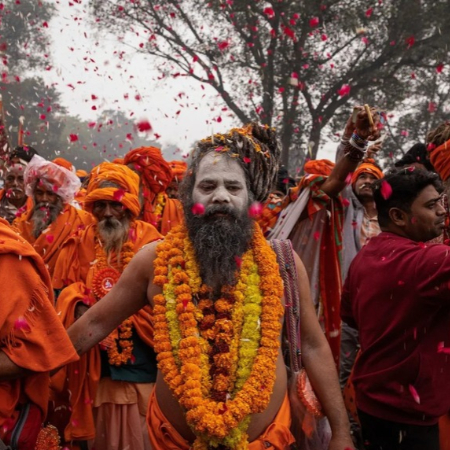
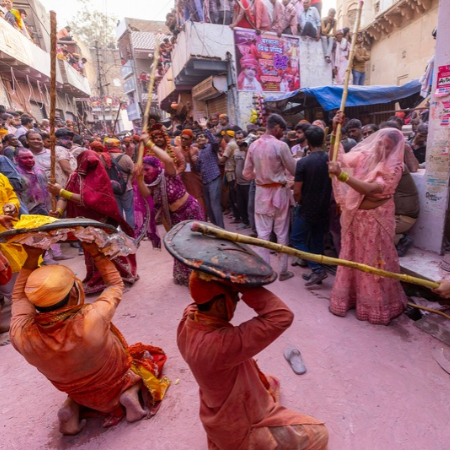
Scale and grandeur have very little bearing on significance. In Lucknow, the Bade Hanuman Temple survives not just as a temple but as a legendary landmark of a particular street visited on the way to work or school, its importance measured in faith rather than footfall. The fairs and festivals held around them draw considerable population at various times in the year. Like the Chaurasi Kosi Yatra in Ayodhya or the Mahashivratri fair in Mahadeva, Barabanki.
Continuity Amid Change: The Endurance of Living Heritage
Awadh, like every living landscape, continues to evolve. Roads widen, riverfronts are redeveloped, old neighbourhoods give way to new ones. The more important question, however, is not what changes, but what endures. Awadh's temples have absorbed change for centuries without ceasing to be sacred; what has kept them alive is not the absence of change but the reverence and belief system of the community around them. That, ultimately, is the real temple here—not any single structure, but the continuity of a living tradition. Architecture may preserve form, but it is collective memory and lived practice that allow a sacred landscape of Awadh to remain relevant across generations.