Redefining Institutions Through Heritage and Contemporary Design
Bridging Tradition, Climate, and Contemporary Needs
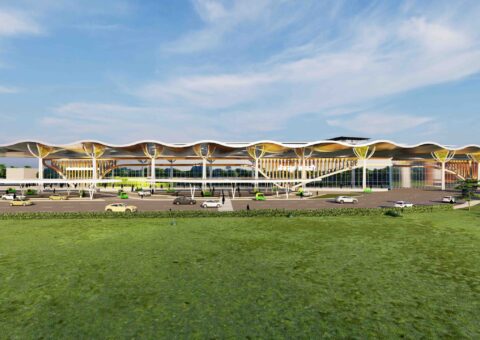
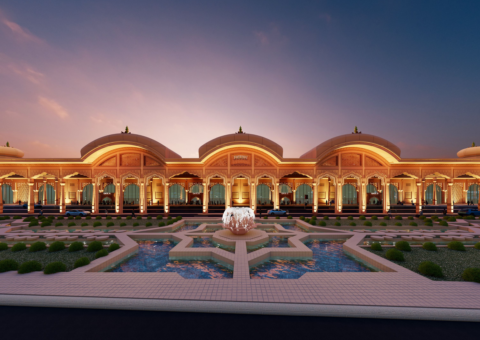
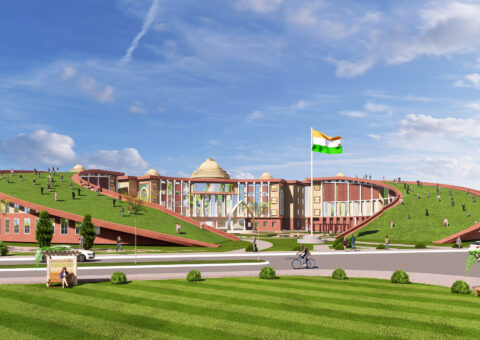
Modern institutional design must integrate historical references with spatial strategies that respond to functional, environmental, and technological requirements. Traditional forms, regional materials, and visual motifs anchor buildings within their context, while courtyards, atria, and terraces create physical and visual connectivity. Circulation is layered to enable informal encounters without compromising formal hierarchies.
In the Indian context, climate-responsive and passive strategies are essential. Cross-ventilation, solar-oriented building layouts, shaded courtyards, and locally appropriate materials maintain comfort and reduce energy demand. High-performance systems, including smart MEP infrastructure, digital learning environments, and energy monitoring, complement these passive strategies, creating sustainable, high-tech institutions that preserve their cultural identity.
Bridging Tradition, Climate, and Contemporary Needs
Modern institutional design must integrate historical references with spatial strategies that respond to functional, environmental, and technological requirements. Traditional forms, regional materials, and visual motifs anchor buildings within their context, while courtyards, atria, and terraces create physical and visual connectivity. Circulation is layered to enable informal encounters without compromising formal hierarchies.
In the Indian context, climate-responsive and passive strategies are essential. Cross-ventilation, solar-oriented building layouts, shaded courtyards, and locally appropriate materials maintain comfort and reduce energy demand. High-performance systems, including smart MEP infrastructure, digital learning environments, and energy monitoring, complement these passive strategies, creating sustainable, high-tech institutions that preserve their cultural identity.
Architecture as a Medium of Trust
Beyond programming, architecture shapes perception and behaviour. Strategic orientation, daylighting, and visual connectivity guide movement and reinforce wayfinding. Heritage cues, such as motifs, materiality, and courtyard sequencing, signal continuity, while contemporary technology and adaptable systems enable operational efficiency, digital engagement, and energy performance. Together, these measures convey legitimacy and trust through spatial clarity rather than monumentality alone.
Future-Ready Institutional Environments
Institutional architecture is increasingly designed for adaptability and resilience. Modular, technology-enabled interiors, flexible classroom layouts, and expandable facilities allow campuses to respond to pedagogical, administrative, or civic changes without compromising identity. Buildings are also planned with emergency egress, crowd management, and structural resilience in mind. By integrating heritage, climate-responsive strategies, spatial clarity, technology, and operational preparedness, institutions remain relevant, safe, and trusted while fostering engagement and long-term adaptability.