Terminal Velocity as an Infrastructure Condition On Architecture, Scale, and Capacity
For much of the twentieth century, flying carried a sense of occasion. Airports were places of gathering; departure was marked with emotion; arrival felt consequential. Over time, this sense of theatre was reshaped by volume. As air travel grew, efficiency became the primary driver, and the airport evolved into a calibrated system designed to move large numbers of people consistently and quickly.
India currently occupies an intermediate condition. In many parts of the country, the airport still retains symbolic and emotional weight. Families arrive early, photographs are taken, and messages confirming boarding are shared with significance. In a nation where railways continue to carry the bulk of everyday movement, air travel remains associated with aspiration and transition.
Airports as Urban Systems
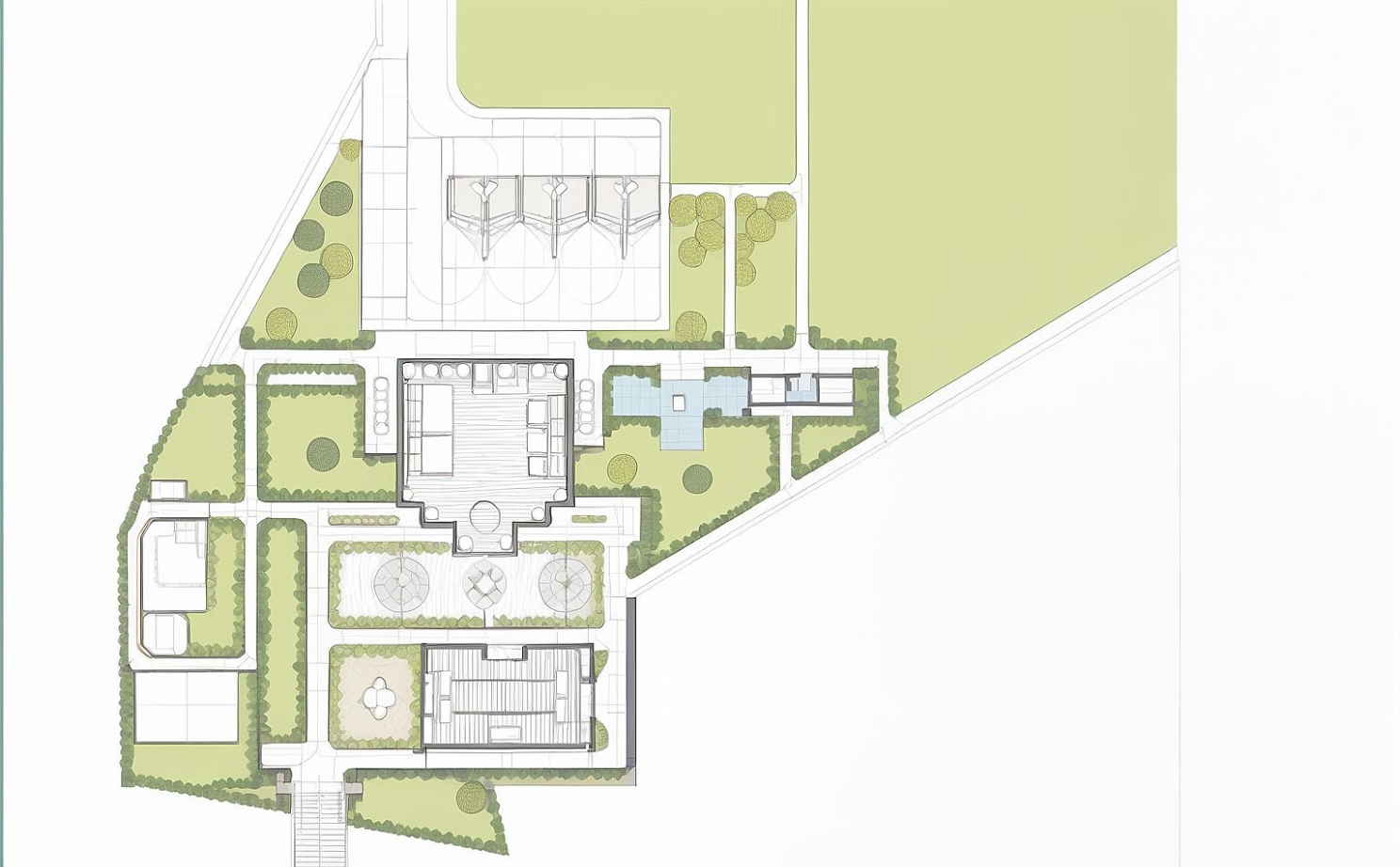
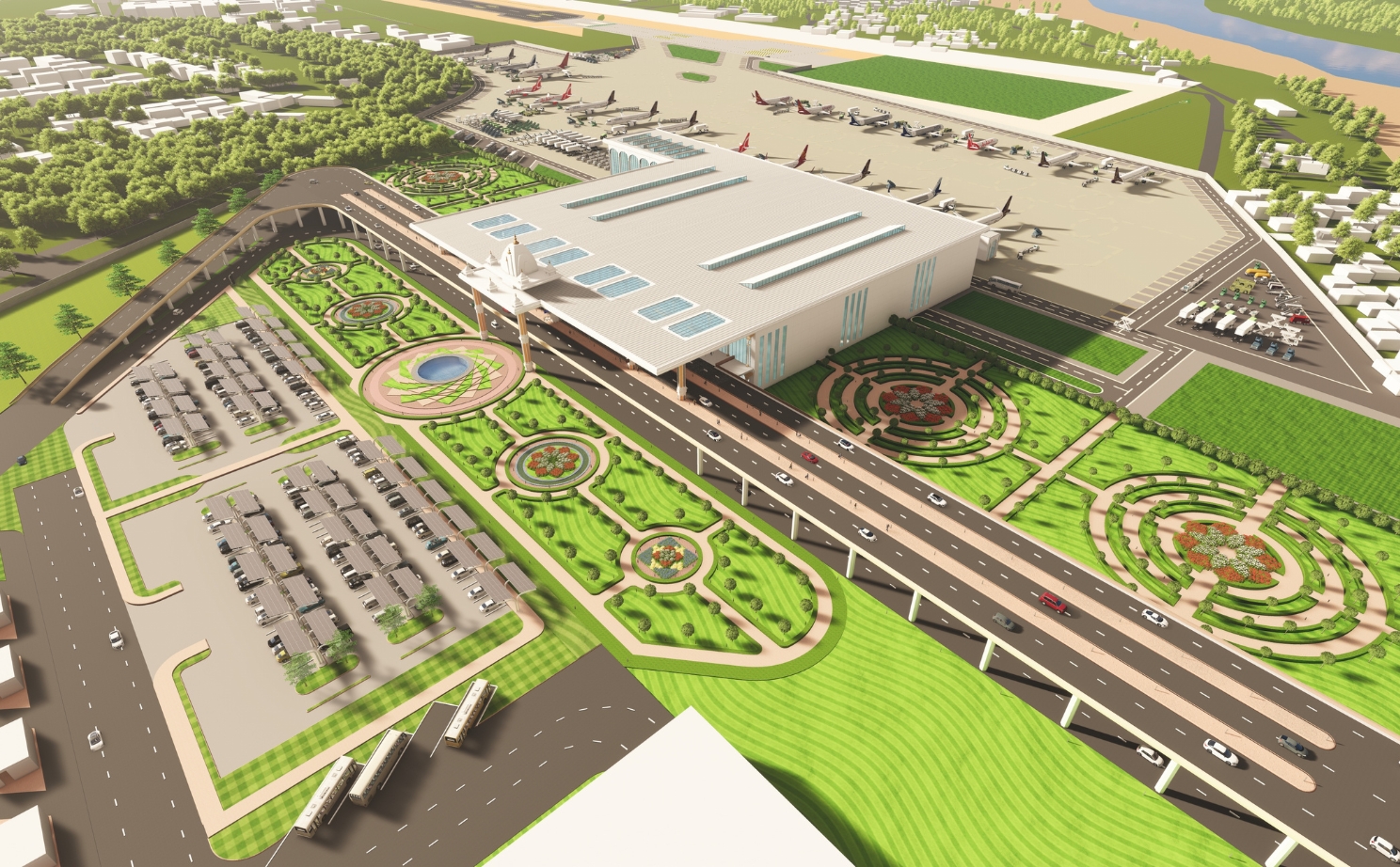
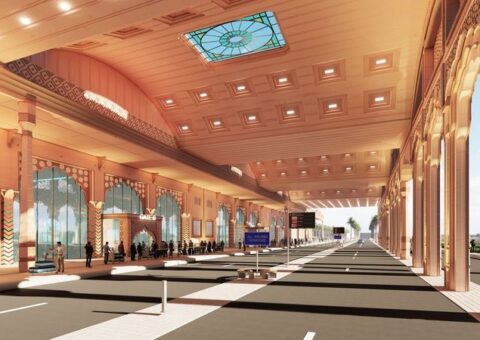
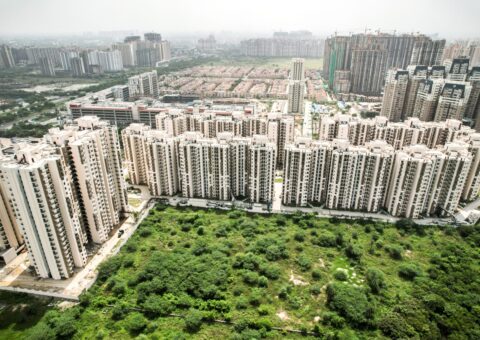
The current phase of airport development in India is defined by scale. Terminals operate as urban systems embedded within expanding metropolitan regions. For architects and planners, the project extends beyond the terminal building. Airside and landside coordination, road networks, rail connections, parking structures, cargo areas, and hospitality programs must be spatially integrated.
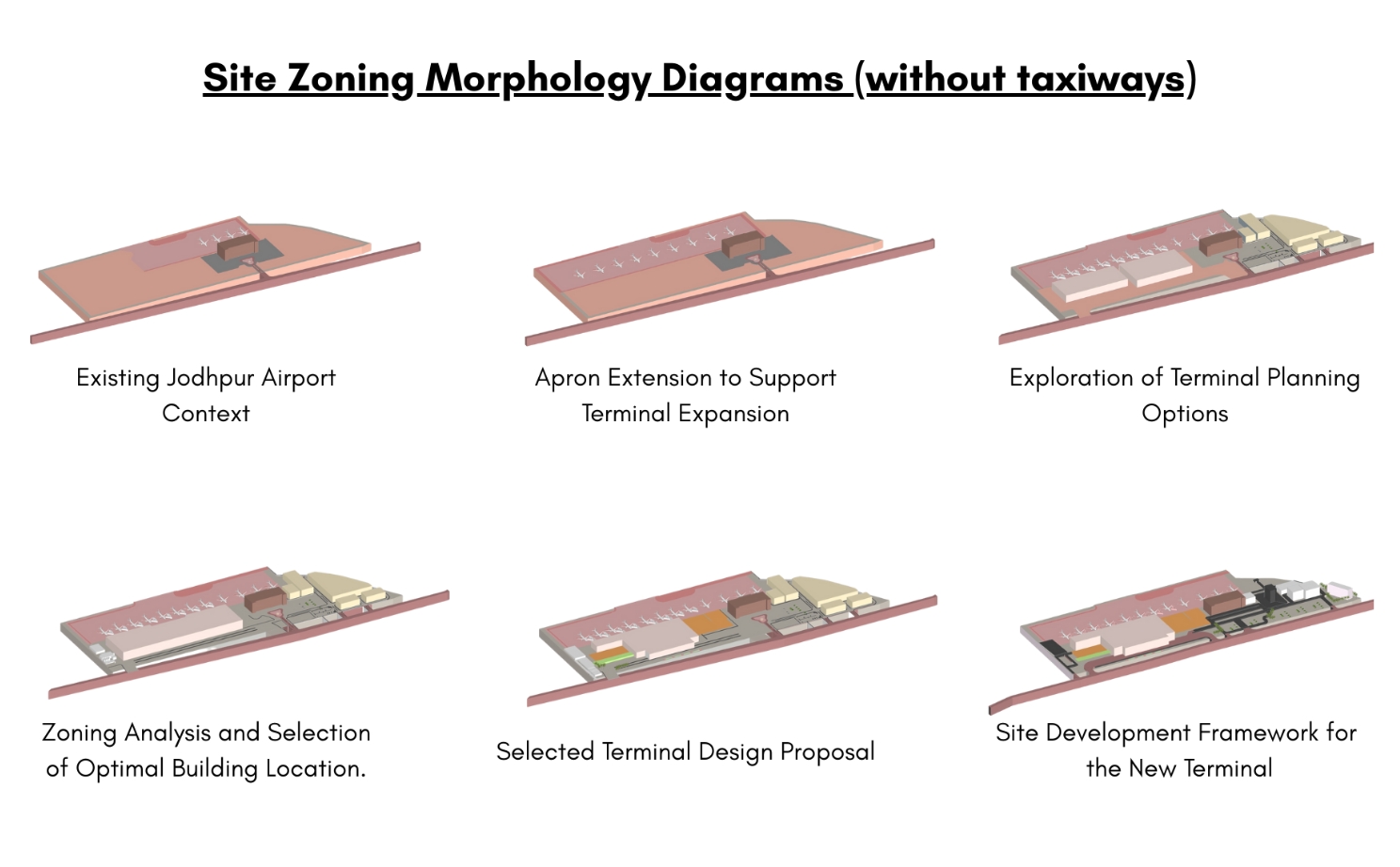
This requires clarity at multiple levels. Master plans must allow for phased expansion while maintaining operational continuity. Landside access must accommodate projected traffic growth. Terminal geometry must align with runway configuration and apron capacity. Design intelligence lies in spatial coordination across these systems.
Expanding regional economies and rising passenger demand reinforce the long-term relevance of this infrastructure. Airports are expected to function efficiently while representing regional progress. The architectural response must address both without compromising operational clarity.
Commercial Infrastructure and Spatial Order
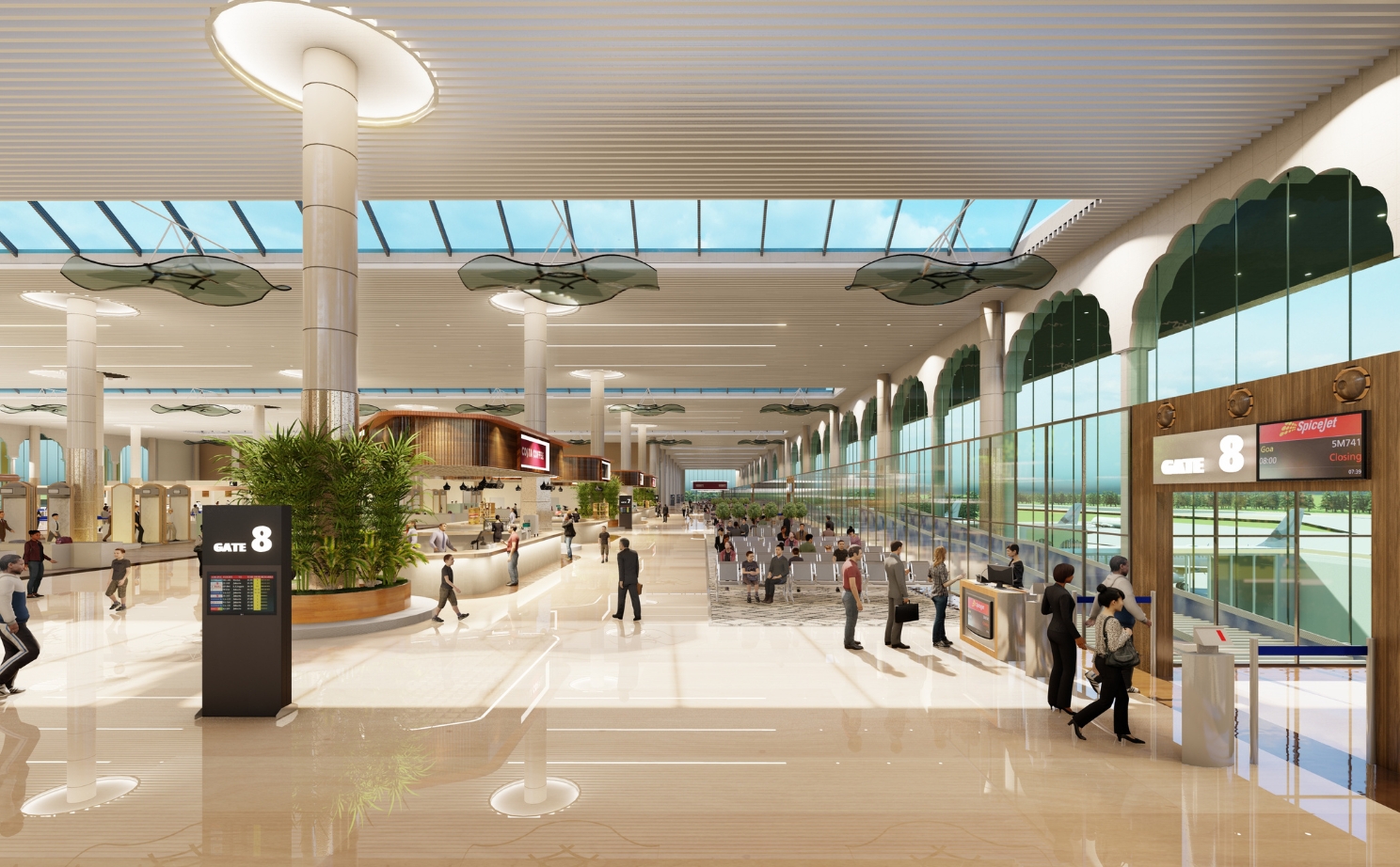
With increased private participation, revenue generation is embedded within terminal planning. Retail frontage, food courts, and advertising are positioned along passenger routes. Commercial programming shapes dwell areas and visibility lines.
The challenge is alignment. Retail placement must support intuitive circulation rather than interrupt it. When commercial planning precedes movement logic, congestion and inefficiency become visible. Effective terminals integrate revenue infrastructure within a coherent spatial framework.
Metropolitan airports in India are approaching a stage where this calibration becomes critical. As passenger volumes stabilise at higher levels, circulation clarity and commercial strategy must operate together within defined spatial hierarchies.
Designing for Capacity and Resource Efficiency
Across India, greenfield airports are being developed to support regional connectivity and projected growth. Many terminals are scaled to anticipate future demand rather than respond to existing volumes. This requires disciplined capacity planning.
Terminals must operate efficiently during the early years of lower traffic while remaining prepared for expansion. Phased construction strategies, modular structural systems, and extendable service spines allow incremental growth without redundant built volume. Overscaled spaces that lack phasing logic increase maintenance loads, energy consumption, and operational costs.
Capacity planning is linked directly to resource efficiency. Building only what can be supported and expanded logically reduces long-term environmental and financial strain.
Adaptability and Lifecycle Performance
Airport terminals are long-term assets. Security protocols change, aircraft configurations evolve, passenger processing technologies advance, and regulatory standards are revised. Spatial frameworks must absorb these shifts without large-scale demolition or reconstruction.
Clear structural spans, modular service distribution, and reconfigurable interior systems allow adaptation over time. Flexibility reduces material waste, extends asset life, and limits embodied carbon associated with repeated intervention.
Lifecycle thinking positions durability, maintainability, and upgrade capacity as primary design criteria. Performance is measured across decades through operational continuity and reduced resource intensity, not at the moment of completion.
Environmental Performance and Context
International benchmarks and consultancy models provide technical consistency in airport development. However, environmental performance depends on regional calibration.
Climatic conditions influence façade design, daylight strategy, shading systems, and cooling demand. Material selection affects durability and maintenance cycles. Energy loads are shaped by orientation, enclosure performance, and internal planning efficiency.
Integrating global standards with local climatic intelligence improves long-term efficiency. Sustainability in airport infrastructure is operational. It is embedded in reduced energy demand, controlled maintenance cycles, and resilient building systems.
Throughput and System Stability
As Indian airports reach higher levels of operational maturity, evaluation increasingly centres on measurable outcomes. Throughput, circulation clarity, phased expansion, lifecycle resilience, and environmental efficiency define success.
Terminal velocity in this context refers to infrastructure operating at sustained capacity with stability and resource discipline. Architecture performs through coordination, adaptability, and environmental responsiveness. The long-term value of India’s aviation infrastructure will be determined by how consistently these systems function once everyday use replaces the inauguration phase. Airports that maintain clarity, efficiency, and structural flexibility will shape the next phase of infrastructure design in the country.