Regenerative Workspaces: Designing Offices That Heal People and Planet Simultaneously
Cities today face twin challenges: safeguarding human well-being in fast-paced environments and addressing the escalating ecological impact of urban growth. Workplaces, which often occupy some of the most significant footprints in our cities, sit at the intersection of these concerns. At STHAPATI, we see corporate and institutional buildings not just as offices but as civic spaces that can actively contribute to urban resilience.
Workplaces as Urban Microclimates
Architecture influences the quality of air, light, and life within our cities. By integrating strategies such as daylight harvesting, adaptive shading, and indoor planting, workplaces can function as restorative microclimates. In our design for the SJVN Office in Delhi, panoramic openings and sensor-based lighting were not only about productivity; they extended the hours during which the building relied less on artificial systems, easing its energy footprint within a dense CBD(add full form). Similarly, the EXIM Bank office incorporates terrace gardens and open work pools, transforming an office building into an urban breathing space. These interventions prove that the cumulative effect of workplace design decisions has the power to change the larger environmental metabolism of a neighbourhood.
Spatial Design for Human Recovery
Civic responsibility also lies in protecting the health of urban citizens who spend long hours indoors. Offices in India often operate for up to 18 hours a day, which makes them critical environments for cognitive and emotional recovery. Our approach focuses on light cycles, colour psychology, and adaptable spatial programming to reduce fatigue and foster psychological well-being. The SJVN Office, for example, was designed with flexible halls and vibrant communal zones that allow workers to shift between collaboration and retreat, reflecting the rhythms of city life where different forms of energy are required at different times of day. These strategies acknowledge that regenerative design is about sustaining people as much as infrastructure.
Materials as Agents of Ecological Repair
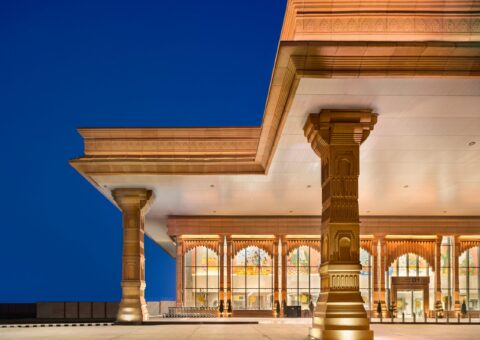
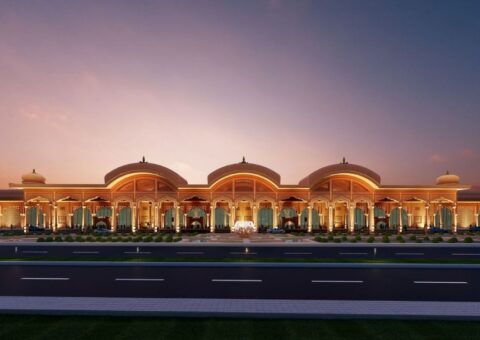
A truly civic-minded workplace must extend its responsibility beyond its users to the wider ecological systems it inhabits. In the Income Tax Headquarters at Lucknow, sustainability began with construction. The pre-engineered steel system reduced dust and on-site waste, while protecting existing trees on the irregular plot. Passive facade protections reduced cooling loads, lowering the building’s carbon emissions for years to come. Material choices such as high-pressure laminates, recycled-content furnishings, and low-dust flooring work quietly in the background, reducing environmental degradation while improving occupant health. These decisions position the workplace as a long-term contributor to urban ecological repair rather than another drain on resources.
Regeneration as a Civic Mandate
At STHAPATI, we believe that the role of architecture is no longer limited to creating efficient buildings. In a time of climate uncertainty and urban intensity, the workplace must become an agent of regeneration. Projects such as SJVN, EXIM Bank, and the IT Headquarters in Lucknow are part of this larger civic vision, each one designed not as an isolated object, but as part of the urban fabric, responding to ecological limits and human needs simultaneously.
By conceiving workplaces as regenerative infrastructures, we aspire to design environments that heal employees during the working day and restore ecological balance in the city at large. This is not only a design philosophy; it is a civic responsibility that defines how we, as architects, contribute to the future of our cities.